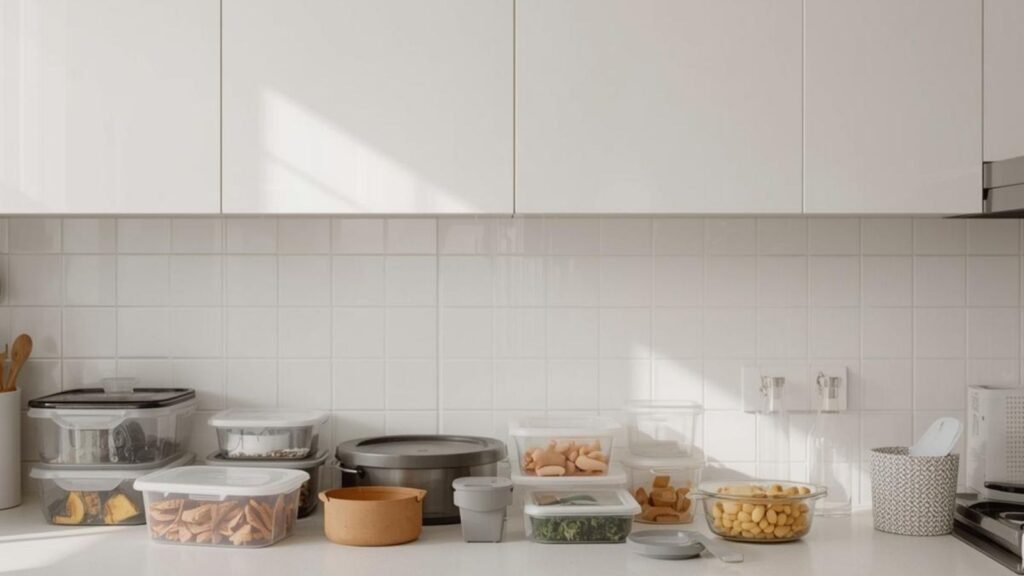
Many people try meal prep more than once.
They plan carefully, buy containers, choose recipes and set aside time.
And for a short while, it works.
Then life gets busy, the system becomes hard to maintain and meal prep quietly fades away.
When this happens, it’s easy to assume the problem is motivation.
More often, the problem is complexity.
When Meal Prep Feels Like Too Much
Meal prep usually fails when it asks too much of everyday life.
That can look like:
- too many meals planned at once
- too many ingredients to manage
- too many decisions packed into one day
- too much pressure to “do it properly”
What starts as a helpful system begins to feel like a task that requires energy most people don’t have every week.
Complexity Makes Meal Prep Fragile
Complex systems rely on ideal conditions.
They work when:
- time is available
- energy is high
- nothing unexpected happens
But everyday life rarely stays that predictable.
When a meal prep routine depends on everything going to plan, it’s easy for one disruption to cause the whole system to collapse.
Simple systems bend.
Complicated ones break.
Why Complicated Meal Prep Increases Food Costs
When a complicated plan starts to slip:
- food goes unused
- ingredients expire
- extra shopping trips happen
- convenience food fills the gaps
Instead of saving money, complexity can quietly increase waste and spending.
The cost isn’t just financial — it’s mental. Once a system feels heavy, it’s less likely to be repeated.
Why Simpler Meal Prep Lasts Longer
Simple meal prep works because it’s easier to return to.
It usually involves:
- fewer meals prepared
- repeated foods
- familiar routines
- flexible expectations
When less effort is required, consistency becomes more likely — even during busy weeks.
This is why smaller, repeatable routines tend to save more money over time than ambitious plans that don’t last.
Simplicity Reduces the Number of Decisions
Every added step creates another decision.
When meal prep is simple:
- fewer choices are needed
- shopping is more predictable
- cooking feels manageable
- follow-through requires less energy
The system supports daily life instead of competing with it.
Food Prep on a Budget Works Best When It’s Easy to Maintain
Food prep on a budget isn’t about doing everything at once.
It’s about:
- deciding less
- repeating what works
- avoiding plans that require constant effort
When meal prep is simple enough to repeat, it naturally lowers food costs by reducing waste, impulse spending and last-minute decisions.
Food prep on a budget works best when it’s easy to maintain. Simple routines that limit how much is planned — including being realistic about how many meals you should prep — are far more likely to reduce waste, stress, and unnecessary spending over time.
You Don’t Need a Perfect System
If meal prep hasn’t worked before, it doesn’t mean it can’t work at all.
It may simply need to be:
- smaller
- simpler
- more forgiving
A system that feels easy to come back to is far more valuable than one that looks impressive but doesn’t last.
Where to Go Next
If meal prep feels exhausting rather than helpful, complexity is often the reason.
Reducing how much is planned — not increasing effort — is usually what makes food prep finally stick.